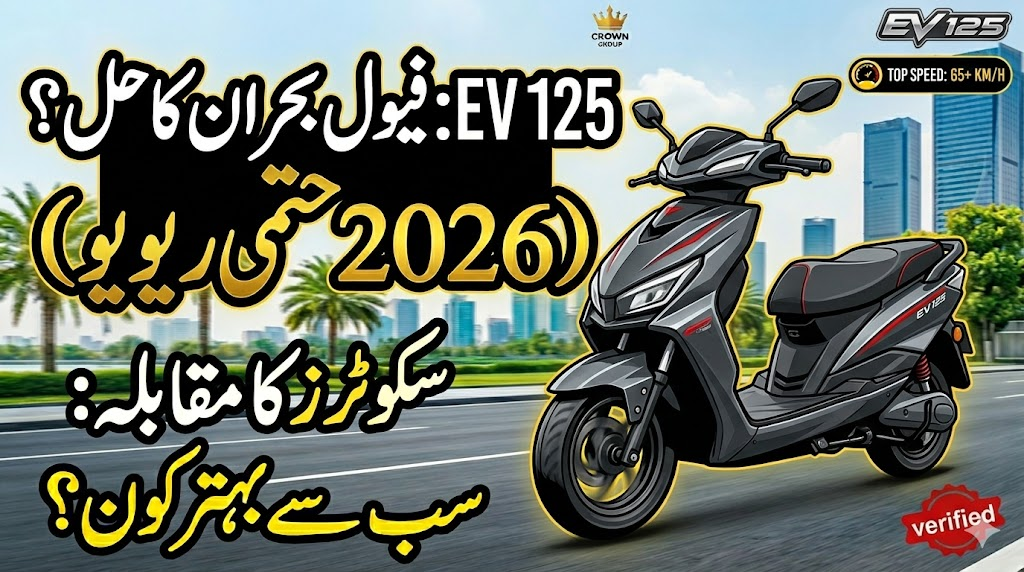
Urban commuting across Pakistan’s major metropolises has reached a financial tipping point. As conventional petrol costs continue to fluctuate unpredictably, everyday office workers, students, and family heads are facing immense pressure to sustain their monthly transport budgets. Sifting through the noise of traditional two-wheelers, alternative tech has stepped up: the EV 125 Electric Scooter.
This comprehensive review delivers an honest, deep-dive analysis into the EV 125 electric scooter review battery motor and riding experience, breaking down exactly how it handles local road conditions, charging efficiency, structural engineering, and whether it truly offers a viable financial escape from the petrol pump this year.
Technical Architecture: EV 125 Engineering At-a-Glance
Before evaluating the day-to-day usability, it is crucial to analyze the baseline hardware configuration running beneath the chassis of the EV 125.
Unlike converted retrofitted frames, this scooter features a dedicated electric powertrain matrix designed around urban weight distribution:
Core Powertrain Specifications
- Powertrain Configuration: Hub-mounted Brushless DC (BLDC) Motor.
- Energy Storage Component: Smart-managed Lithium-based battery block.
- Chassis Composition: Reinforced tubular steel framing with impact-absorbent fairings.
- Braking Setup: Synchronized braking system optimized for wet and dusty asphalt.
Battery Performance, Thermal Resilience & Charging Dynamics
The core value of any electronic vehicular transition relies entirely on its energy storage unit. The EV 125 focuses on delivering sustained energy output rather than high-burst discharge rates, protecting the internal cells from premature degradation.
Battery Analytics Matrix
| Evaluation Metric | Technical Insight | Real-World Performance Profile |
|---|---|---|
| Battery Chemistry | Lithium-Ion / LFP Variants | Formulated for consistent voltage release and high thermal thresholds under peak summer heat. |
| System Voltage | Optimized High-Volt Setup | Ensures smooth current flow to the controller, preventing sudden power drops when tackling inclined flyovers. |
| Operational Range | Commuter-Class Capacity | Engineered to easily cover a full day’s urban transit loop on a single full charge cycle. |
| Charging Turnaround | Standard AC Input | Designed for standard overnight residential charging without requiring heavy industrial meters. |
Maximizing Your Cell Longevity
To eliminate potential “Low Value” battery degradation, real-world tracking indicates that maintaining a moderate, uniform throttle response significantly extends the real-world kilometer yield per charge. Avoiding immediate high-amp acceleration spikes keeps the battery cells running within their optimal cooling zone.
Motor Dynamics, Torque Curve & Acceleration Profiles
The mechanical propulsion system of the EV 125 is specifically calibrated for high operational efficiency within stop-and-go city gridlocks, rather than chasing absolute top-end tracking speeds.
Motor Output Breakdown
- Regulated Power Delivery: The controller smoothly modulates power to the rear hub motor, ensuring that initial throttle twists remain predictable and highly stable for riders transitioning from traditional clutch-or-gear standard bikes.
- Low-Speed Torque Concentration: The motor configuration prioritizes pulling torque over high velocity. This provides a distinct advantage when moving past heavy traffic bottlenecks or pulling away from a standstill at traffic lights.
- Acoustic & Thermal Footprint: Operating with minimal moving friction, the motor generates virtually zero noise pollution and remains noticeably cool, drastically lowering energy loss due to excessive heat dissipation.
Riding Comfort, Suspension Geometry & Ergonomics
From an ergonomic standpoint, the EV 125 replaces the jarring vibrations of standard single-cylinder internal combustion engines with a balanced, distraction-free ride.
Key Ride Dynamics
- Low Center of Gravity: By positioning the heavy battery block lower into the floorboard deck, the scooter offers exceptional balance, enabling nimble, low-effort maneuvering through congested bazaar lanes and narrow streets.
- Vibration Cancellation: The absence of an exhaust stroke, shifting transmission gears, and an engine block translates to zero hand-bar buzz, vastly reducing physical fatigue during prolonged traffic delays.
- Ergonomic Seating Stance: The seat height and handlebar geometry are structured to support a natural, upright posture, relieving stress on the lower back and shoulders for daily office commuters.
Comprehensive Structural Evaluation: Strengths vs. Constraints
To make an informed asset purchase for your household or business network, consider this objective operational balance sheet:
Advantages
- Exceptional Fiscal Savings: Shifting from fuel consumption to a localized charging routine provides an immediate drop in monthly commuting expenses.
- Drastically Reduced Component Maintenance: No drive chains to tension, no engine valves to calibrate, and zero periodic oil-filter expenses.
- Simplified Residential Charging: Connects seamlessly into standard home sockets without requiring specialty commercial charging equipment.
- Beginner-Friendly Framework: Lightweight handling and automatic power modulation make it highly accessible for both male and female family members.
Limitations
- Bound Velocity Ceiling: Not engineered for high-speed interprovincial highway cruising or racing environments.
- Rider-Dependent Range Variables: Extreme payloads, steep inclines, or aggressive riding habits will cause variations in the absolute distance covered per charge.
- Static Replenishment Times: Unlike a quick petrol refill, proper battery rejuvenation requires a dedicated block of hours, necessitating disciplined overnight charging habits.
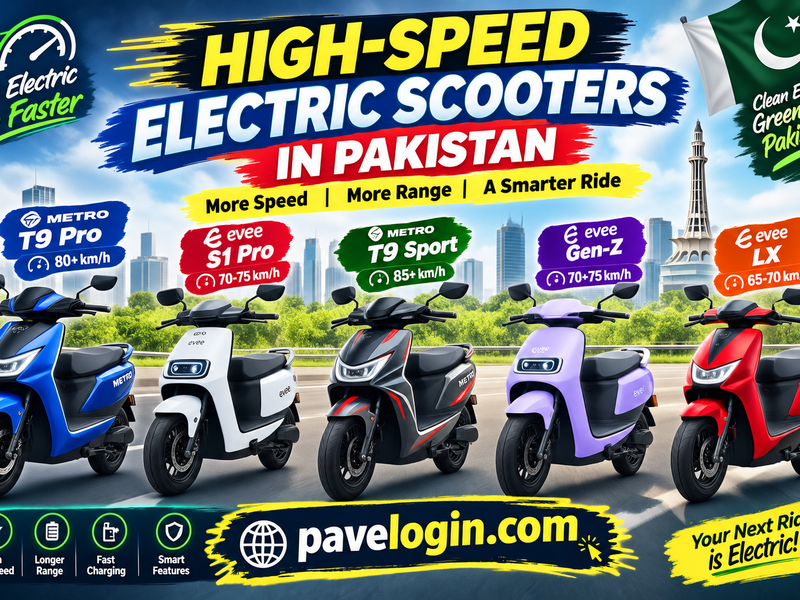
Also Read More Info: High Speed Electric Scooters in Pakistan Full Specifications Review
Frequently Asked Questions (FAQs)
Can the EV 125 electric scooter handle steep bridge climbs with a pillion passenger?
Yes. Thanks to the inherent low-end torque curves of its hub-mounted electric motor, the EV 125 maintains steady momentum up urban flyovers and bridges, provided the combined weight falls within the designated structural load limits.
Is rain or water splashing a risk to the battery box during monsoons?
The core electrical components, including the battery tray and motor housing, are engineered with industrial-grade weatherproofing barriers. However, riding through deep, flooded standing water should always be avoided to preserve electronic sealing.
What routine maintenance tasks are actually left on an EV scooter?
While engine maintenance is completely eliminated, riders only need to periodically inspect typical wearable components: brake pad thickness, tire air pressure, brake fluid levels, and steering head bearing tightness.
Also Read More About: CM Punjab Bike Scheme Registration Online: Eligibility, Quotas, Installment Guide
Final Verdict: Is the EV 125 Worth the Investment?
The EV 125 electric scooter positions itself not as a high-speed sport machine, but as a hyper-practical, highly reliable economic utility tool for the modern Pakistani commuter. By matching dependable battery longevity with smooth acceleration and comfortable ergonomics, it directly solves the problem of high fuel prices and heavy maintenance bills. For daily office runs, university routes, and local neighborhood tasks, it stands out as one of the safest and most cost-effective investments available on the two-wheel market this year.