Pakistan is expanding its electric-vehicle ecosystem through the New Energy Vehicles (NEV) Policy 2025–30 and the related Pakistan Accelerated Vehicle Electrification (PAVE) Scheme. The policy places particular emphasis on two- and three-wheelers because these vehicles represent an important part of everyday transport and commercial activity in Pakistan.
For people interested in electric rickshaws, loaders and other commercial three-wheelers, the important point is that the government’s support is structured as a cost-sharing and financing framework. The exact benefit available to an applicant can depend on the vehicle category, approved vehicle, financing arrangement and rules issued by the relevant authorities.
This guide explains what the official policy currently says, what applicants should verify before making a financial commitment, and how the PAVE program fits into Pakistan’s wider electric-mobility strategy.
Important: PAVE is a government program, but individual subsidy amounts, eligible vehicles, financing conditions, application dates and other operational details can change. Always verify the latest information through the official government portal or notification before paying money or signing a financing agreement.
What Is the PAVE Scheme?
The Pakistan Accelerated Vehicle Electrification (PAVE) Scheme was launched alongside Pakistan’s New Energy Vehicles Policy 2025–30. The Engineering Development Board (EDB), working under the Ministry of Industries & Production, has a central role in implementing the policy and supporting the country’s transition toward electric mobility.
The broader NEV policy aims to increase the adoption of electric vehicles while developing local manufacturing, charging infrastructure, financing mechanisms and supporting regulations.
The policy specifically identifies two- and three-wheelers as an important priority because of their widespread use and their relevance to lower-income users and commercial transport.
What Support Is Available for Three-Wheelers?
The official NEV Policy 2025–30 establishes a cost-sharing mechanism for eligible electric vehicles.
For three-wheelers, the policy gives an initial reference cost-sharing amount of PKR 400,000. However, this should not be interpreted as a guaranteed cash payment for every applicant. The policy states that the Steering Committee will determine the exact amount of cost sharing for a particular vehicle category and the method through which it is provided.
The policy also provides for different mechanisms that may be used to support NEV purchases, including:
- Direct support following verification of vehicle purchase and registration
- Subsidized financing through participating financial institutions
- Other mechanisms determined under the scheme’s implementation framework
Three-Wheeler Reference Amount
| Item | Official policy position |
|---|---|
| Vehicle category | Three-wheelers |
| Initial reference cost sharing | PKR 400,000 |
| Policy period | 2025–30 |
| Support structure | Cost sharing / financing mechanisms |
| Final amount | Subject to applicable scheme and Steering Committee decisions |
| Eligible vehicle | Must meet the applicable government requirements |
The government also intends to reduce cost-sharing support progressively as the electric-vehicle market develops and prices move toward parity with conventional vehicles. The policy’s projected schedule reduces the reference support percentage in later years, subject to review by the Steering Committee.
Who May Benefit From the Three-Wheeler Program?
The policy is designed to encourage electric mobility across different user groups, with particular attention to two- and three-wheelers and commercial applications.
However, applicants should not assume that simply owning a CNIC or working as a rider automatically guarantees eligibility.
Actual eligibility can depend on the current application round and its implementation rules.
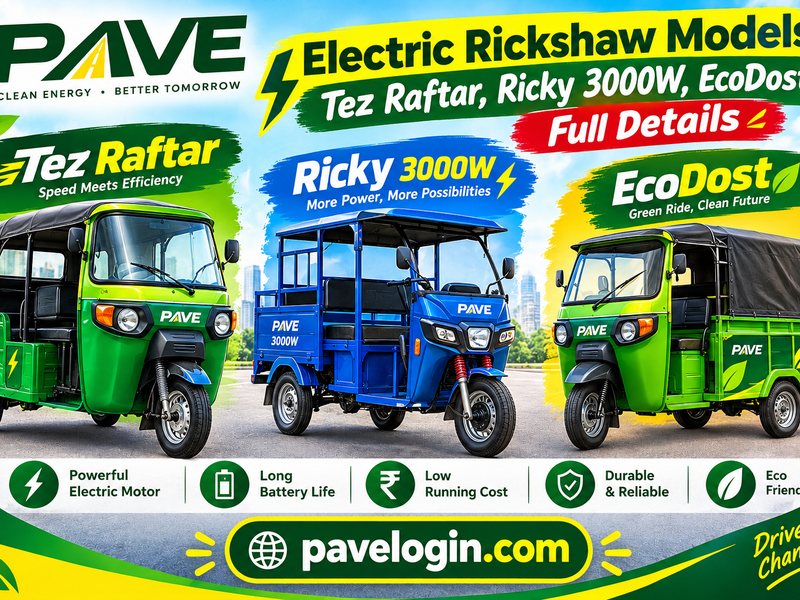
Also Read More: Electric Rickshaw Models Tez Raftar, Ricky 3000W, EcoDost Full Details
Before applying, check the latest official instructions for:
- Age requirements
- CNIC requirements
- Vehicle category
- Approved vehicle/OEM list
- Financing requirements
- Credit assessment
- Down payment or equity requirements
- Registration requirements
- Insurance requirements
- Application deadline
- Any quota or allocation conditions
This distinction is important because policy-level objectives and the conditions of an individual application round are not necessarily the same thing.
Why Are Electric Three-Wheelers a Government Priority?
Pakistan’s transition toward electric mobility is not limited to private cars.
The NEV Policy 2025–30 identifies two- and three-wheelers as a major area for electrification. According to the policy, these vehicle categories are especially important because they serve large numbers of users and include many lower-income consumers.
Electric commercial three-wheelers can potentially provide benefits in several areas:
Lower dependence on petrol
Electric vehicles do not use petrol or diesel for propulsion, which can reduce direct dependence on imported petroleum.
Different operating-cost structure
An electric vehicle’s running cost depends on electricity tariffs, charging efficiency, battery performance, maintenance and usage patterns. Therefore, applicants should calculate their expected monthly operating cost rather than assuming that every electric vehicle will automatically be cheaper.
Cleaner urban transport
The government has linked EV adoption with broader environmental and energy objectives. The Ministry of Industries & Production has also highlighted electric two- and three-wheelers as an important part of the country’s mobility transition.
Financing and Bank Support
One of the important parts of the NEV policy is improving access to financing.
The policy discusses working with the State Bank of Pakistan and financial institutions to explore financing arrangements that can make NEVs easier to purchase. It also recognizes the importance of credit assessment and financial stability when expanding vehicle financing.
This means applicants should carefully distinguish between:
Government cost sharing and Bank financing
They are not the same thing.
A subsidy or cost-sharing benefit reduces the effective acquisition cost under the applicable rules, while a bank facility is a financing arrangement that may have its own eligibility requirements, repayment schedule, insurance requirements and other costs.
Before accepting financing, ask the participating institution for a written breakdown showing:
- Vehicle price
- Government contribution, if applicable
- Applicant’s equity/down payment
- Amount financed
- Financing tenure
- Monthly installment
- Insurance cost
- Processing or other applicable charges
- Total amount payable
This calculation is more useful to an applicant than looking only at the advertised subsidy figure.
What About Electric Rickshaw Models?
Not every electric rickshaw available in the Pakistani market should automatically be considered eligible under PAVE.
The government policy states that eligible NEVs must satisfy applicable requirements relating to performance, safety, environmental protection and after-sales service.
Therefore, before selecting a vehicle, applicants should verify whether the specific model and manufacturer are included in the applicable government-approved framework.
Do not rely solely on a seller’s statement that a vehicle is “PAVE approved.”
Ask for documentary confirmation from the relevant official or participating channel.
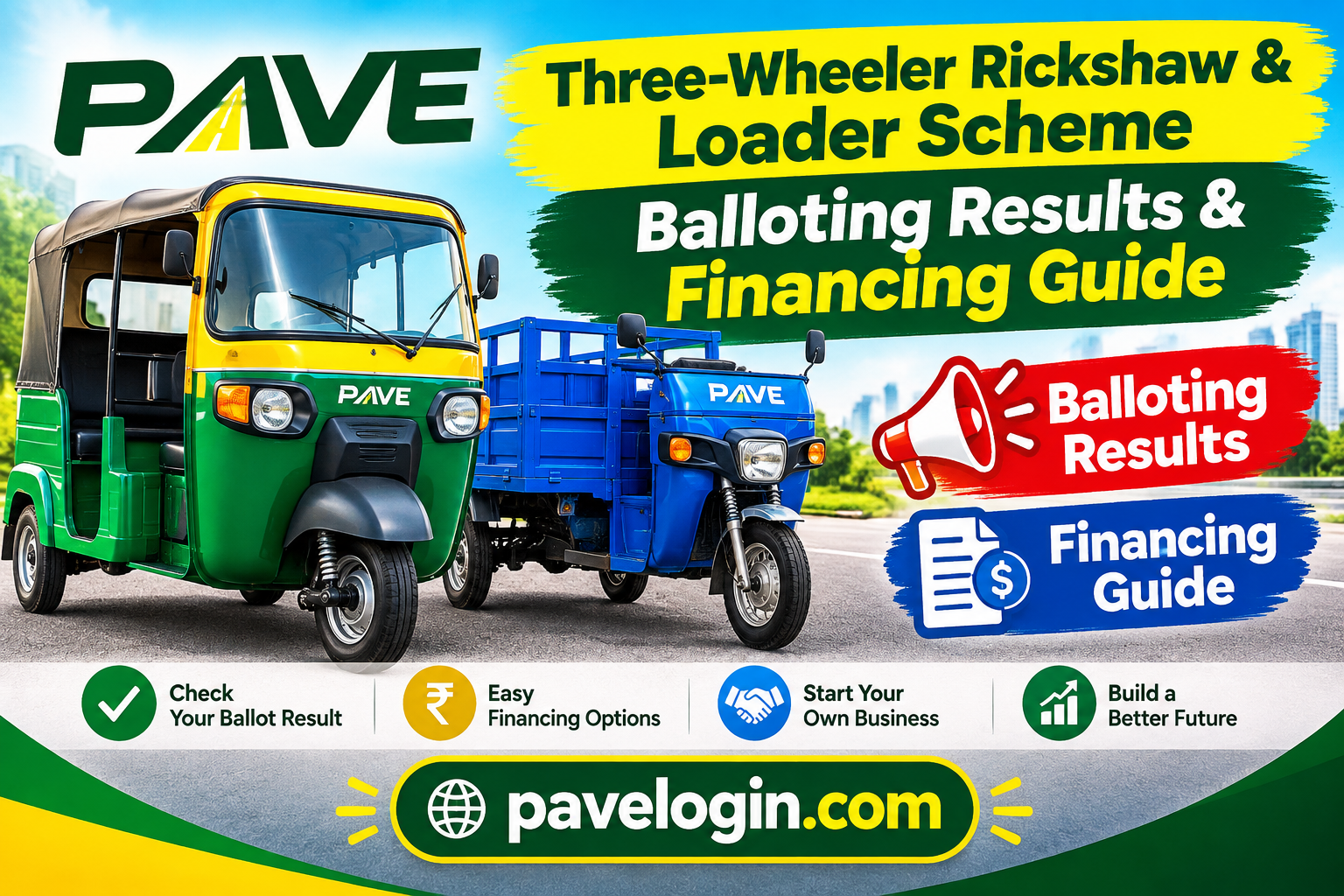
How to Apply or Check Your Application
The Ministry of Industries & Production has publicly identified pave.gov.pk as the website for PAVE-related registration information. For example, the ministry announced in September 2025 that EV-bike registration under the NEV Policy was available through the PAVE website.
For any current application round:
Step 1 — Check the official announcement
Look for the latest announcement from the Ministry of Industries & Production or the official PAVE platform.
Step 2 — Confirm the current category
Make sure the application round actually includes the vehicle category you want, such as a three-wheeler or commercial EV.
Step 3 — Read the current eligibility rules
Check the current age, CNIC, financing, vehicle and documentation requirements rather than relying on an older article or social-media post.
Step 4 — Complete the application
Enter your personal information carefully and keep your application/reference number.
Step 5 — Save your documents
Keep copies or screenshots of:
- Application/reference number
- Submitted information
- Uploaded documents
- Confirmation message
- Any official communication
Step 6 — Check your status through the official channel
Use the official PAVE platform or the government communication identified in the relevant application announcement.
Never send money to an unofficial person claiming that they can guarantee selection.
What Happens After Selection?
The exact post-selection procedure depends on the applicable implementation rules.
Generally, an applicant may need to complete additional verification, financing, vehicle selection, registration and other formalities before the vehicle is delivered.
The NEV policy also states that vehicles obtained under the scheme can be subject to restrictions on transfer for a specified period determined under the applicable rules.
Applicants should therefore read the financing and ownership documents carefully before signing.
Important: Don’t Confuse Policy Information With a Guaranteed Benefit
One of the biggest mistakes applicants can make is reading an older social-media post or blog article and assuming that the advertised amount is guaranteed.
For example, the official policy currently gives PKR 400,000 as an initial reference cost-sharing amount for three-wheelers, but it also says that the Steering Committee determines the exact amount and method of cost sharing.
Therefore:
Reference amount ≠ guaranteed cash payment for every applicant.
The final benefit should always be confirmed from the current official application terms.
Frequently Asked Questions
Is PAVE a federal program?
PAVE is part of the federal government’s electric-vehicle policy framework and was launched alongside the New Energy Vehicles Policy 2025–30. The Engineering Development Board has a central implementation role.
How much is the three-wheeler subsidy?
The NEV Policy 2025–30 specifies an initial reference cost-sharing amount of PKR 400,000 for three-wheelers. The exact benefit and payment mechanism are subject to the applicable implementation decisions.
Is PKR 400,000 guaranteed for everyone?
No. It should not be described as a universal guaranteed cash payment. The policy says the exact amount and method of cost sharing are determined under the scheme’s implementation framework.
Can I choose any electric rickshaw?
Not necessarily. Eligible vehicles must satisfy the applicable government requirements, including standards relating to performance, safety, environmental protection and after-sales service.
Where can I find official PAVE information?
The Ministry of Industries & Production has directed applicants to pave.gov.pk for PAVE-related registration information. Always check the latest government announcement before submitting an application.
Does government support mean the vehicle is free?
No. Government cost sharing and bank financing do not necessarily mean that the applicant pays nothing. Depending on the applicable arrangement, the applicant may still have to contribute equity, pay financing-related costs, insurance or other charges.
Things to Check Before Buying an Electric Rickshaw
Before making a purchase decision, compare the following:
| Check | Why it matters |
|---|---|
| Battery warranty | Battery replacement can be a significant expense |
| Motor warranty | Important for commercial usage |
| Spare parts | Availability affects downtime |
| Charging time | Directly affects daily operations |
| Real-world range | Claimed range may differ from actual usage |
| Payload capacity | Important for loader/rickshaw businesses |
| Service network | Reduces maintenance problems |
| Financing cost | Determines the real total purchase cost |
| Registration | Check the applicable provincial/territorial rules |
| Insurance | Verify the required coverage and premium |
This checklist can help applicants evaluate the total ownership cost, rather than choosing a vehicle only because it carries a subsidy.