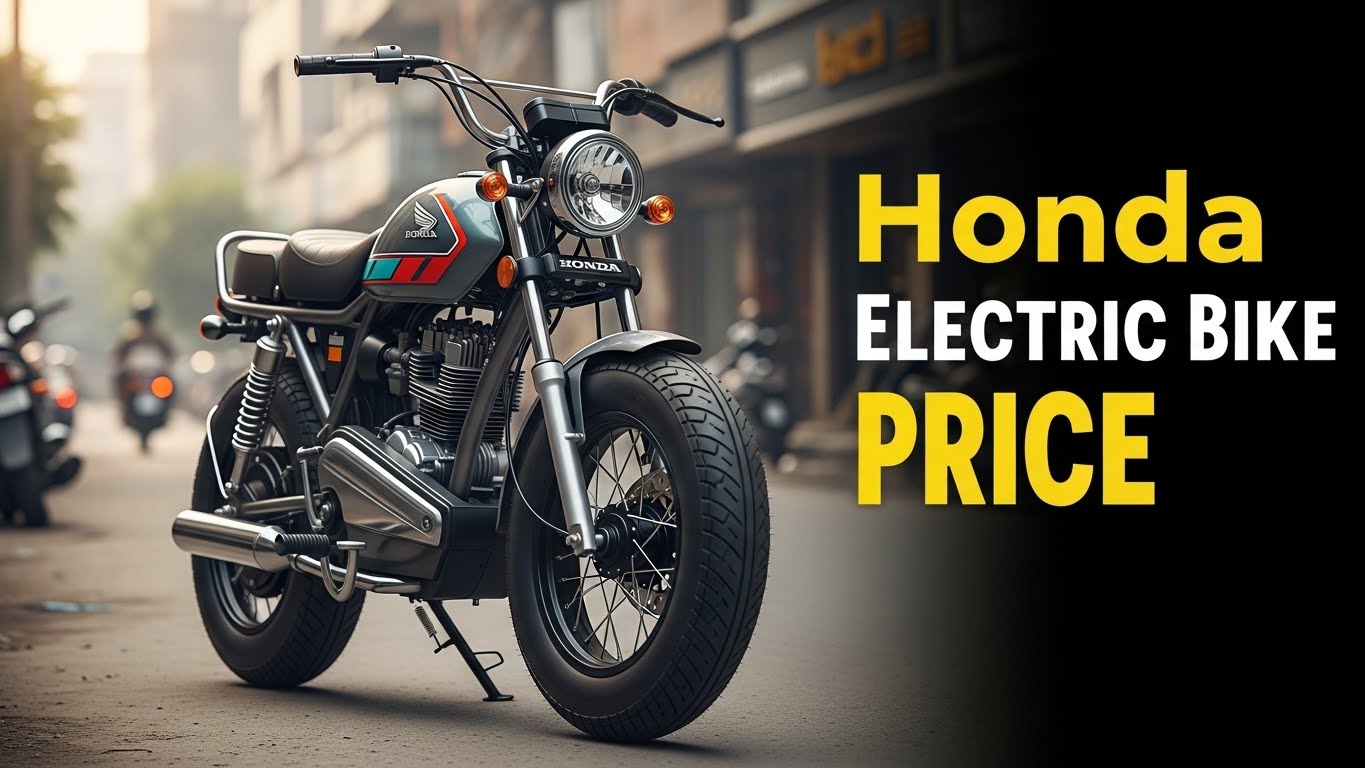
Petroleum pricing pressures and macroeconomic fluctuations have forced Pakistani commuters to re-evaluate traditional internal combustion transit. While local commuter networks rely heavily on standard 70cc and 125cc petrol platforms, the structural shift toward Electric Vehicle (EV) technology has intensified. Consequently, searching for the official Honda Electric Bike Price in Pakistan requires an understanding of official corporate strategies, commercial pilot testing, and the financial reality of grey-market custom retrofits.
The Core Corporate Status: Assembly & Operational Testing
Atlas Honda has formally initiated its strategic transition into the domestic electric vehicle space, aligning with national target policies aimed at expanding the local EV footprint. However, a distinction must be made between mass consumer retail availability and active industrial testing.
Corporate Roadmap Timeline:
[Nov 2023: Soft Launch at Sheikhupura Factory] ➔ [2024-2025: Institutional Testing (NUST Partner Phase)] ➔ [2026 Status: PSX Filing & Commercial Approvals]
The flagship project driving this initiative is the Honda BENLY e electric scooter series, which underwent an initial soft launch and operational testing phase at the Sheikhupura assembly plant. Rather than an immediate nationwide retail launch for individual commuters, initial units were deployed into specialized commercial target groups—such as corporate courier networks and academic research infrastructure partnerships (including the National University of Sciences & Technology – NUST)—to evaluate battery thermal stability against local weather variations and infrastructural stress. Recent filings submitted to the Pakistan Stock Exchange (PSX) confirm that commercial regulatory approvals are being actively finalized for localized deployment.
Projected Price Framework & Asset Class Matrix
Because official mass retail pricing is subject to structural localization and import duties, the financial matrix across different asset classes is categorized as follows:
| Vehicle Class & Identification | Structural Source Group | Estimated Financial Bracket (PKR) | Core Technical Nature |
| Honda BENLY e: I / II Series | Official Commercial Fleet Baseline | PKR 850,000 to PKR 950,000 | Specialized heavy-duty utility configuration with a rear industrial carrier rack. Powered by dual battery packs. |
| Honda ICON e: Configuration | Independent Third-Party Import Channels | PKR 450,000 to PKR 550,000 | Urban commuter layout; lacks localized corporate warranty cover or official spare parts channels. |
| Custom 70cc / 125cc EV Conversions | Local Retrofit Workshops | PKR 250,000 to PKR 350,000 | Standard local frames stripped of combustion engines and fitted with aftermarket hub motors and custom lithium cell arrays. |
Technical Performance Profile: The BENLY e Standard
The engineering profile of the factory-tested BENLY e platform establishes the benchmark for premium electric two-wheelers in the local market:
- Powertrain Architecture: Utilizes a specialized Brushless DC (BLDC) motor setup ranging from a 2.8 kW output (equivalent to 3.8 horsepower) up to a 4.2 kW output (5.7 horsepower) on high-tier variants.
- Torque Delivery: Generates an immediate torque curve between 13 Nm and 15 Nm, providing essential climbing power for urban flyovers and heavy payloads.
- Energy Storage Matrix: Equipped with dual 48V Honda Mobile Power Pack e lithium-ion modules operating in a combined parallel configuration.
- Real-World Range Dynamics: Up to 100 kilometers under optimal eco-mode routing (tested at an average speed of 30 km/h). Range scales down to approximately 43 kilometers under continuous load speeds of 60 km/h.
- Chassis & Braking Integration: Built on a reinforced underbone frame featuring an integrated Combined Braking System (CBS) and a dedicated mechanical rear brake lock knob for secure parking stabilization.
Detailed Financial Math: Charging Overhead vs. Petrol Cost Analysis
To measure the true economic return on investment when switching from a petrol motorcycle to an electric vehicle, we look at monthly energy consumption figures based on standard residential electricity tariffs versus open-market fuel rates:
Also Read About: Two Wheeler EV-Bikes Scheme 2026 – Nationwide Opportunity for All Pakistanis
1. Traditional 70cc Combustion Motorcycle Costs
- Average Daily Commute: 30 Kilometers (Totaling ~900 KM per calendar month).
- Fuel Economy Baseline: 45 KM per Liter.
- Monthly Fuel Volume Required: 20 Liters.
- Estimated Monthly Fuel Cost: ~ PKR 5,500 to PKR 6,500 (Excludes routine engine oil, air filter, and spark plug replacement costs).
2. Premium Electric Platform Costs (BENLY e Baseline)
- Battery Pack Capacity: ~1.3 kWh to 2.6 kWh total capacity.
- Grid Energy Units per Full Charge: Consumes approximately 1.5 to 3.0 residential billing units (accounting for standard charging brick transformation loss).
- Cost per Unit (Standard Tariff Window): Average PKR 40 to PKR 50.
- Total Cost per Full Charge: PKR 75 to PKR 150.
- Estimated Monthly Charging Cost: ~ PKR 900 to PKR 1,500.
Net Financial Analysis: Transitioning to a verified electric platform provides an immediate drop of up to 75% to 80% in monthly operational energy costs. This creates a direct cash-flow advantage that helps offset the higher initial purchase price over a 24-month ownership cycle.
Structural Risk Assessment & Practical Constraints
✅ Strategic Advantages
- Immunity to Fuel Volatility: Completely shields your daily commute budget from international petroleum price adjustments and domestic fuel tax shifts.
- Simplified Mechanical Architecture: Eliminates complex internal combustion assemblies—including pistons, valves, clutches, gearboxes, and timing chains—reducing unexpected mechanical failure points.
- Upfront Price Lock: Fixed charging structures eliminate the inflation-driven maintenance costs associated with spark plugs, gaskets, and periodic engine oil changes.
❌ Infrastructure Constraints
- Lack of Public Public Fast-Charging Networks: No widespread commercial battery-swapping infrastructure exists across local highways or inner-city commercial sectors.
- High Initial Purchase Cost: Upfront capital requirements are significantly higher than premium petrol options, which can slow down consumer adoption.
- Future Battery Replacement Liability: Lithium-ion cell structures undergo natural chemical degradation over a multi-year cycle, which requires budgeting for eventual long-term battery pack replacement.
Frequently Asked Questions (FAQs)
Q: Can I purchase the Honda BENLY e at local dealerships right now?
A: No. The BENLY e has been utilized primarily in commercial test marketing and institutional research phases. Mass consumer retail availability remains conditional on upcoming corporate rollouts.
Q: Are spare parts for imported electric Honda scooters interchangeable with local petrol models?
A: No. Structural body panels, specialized suspension setups, and electrical components (like controllers and hub motors) are unique to the EV lineup and are not compatible with standard local petrol models.
Q: How do custom electric 70cc conversions perform compared to factory-built units?
A: While retrofitted custom EV conversions offer a lower entry cost, they often lack proper structural balance, sophisticated Battery Management Systems (BMS), and water-resistant wiring harnesses, making them less reliable than factory-engineered platforms.
Q: What is the weight capacity of the commercial-grade BENLY e series?
A: The standard BENLY e: I carrier rack is legally rated for a cargo payload of 30 kg, while the heavy-duty BENLY e: II variant extends cargo capability up to 60 kg.