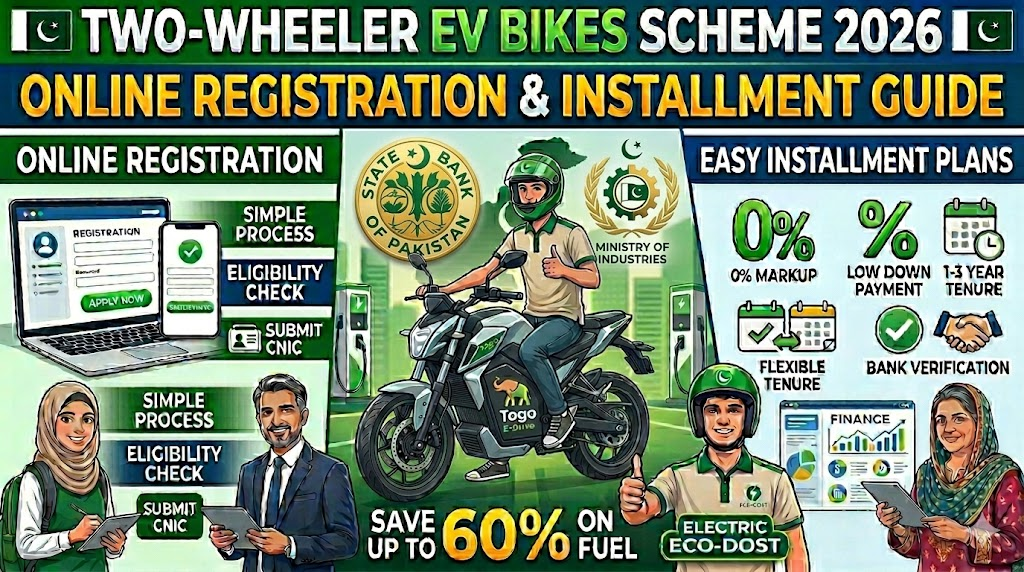
The escalating cost of petroleum products and traditional motorcycle maintenance has created an urgent demand for alternative transport solutions in Pakistan. To alleviate this economic pressure on middle and lower-income classes, the government has launched the Two-Wheeler EV-Bikes Scheme 2026. This national initiative accelerates the adoption of eco-friendly electric bikes and scooters by offering massive price subsidies and interest-free financing structures, enabling citizens to bypass fuel dependencies entirely.
By transitioning from localized provincial projects into a unified federal framework, this phase ensures equitable vehicle distribution across all administrative regions of the country.
Key Financial Benefits: Subsidy & Interest-Free Loans
The core objective of the 2026 EV transition policy is affordability. The program combines direct monetary relief with flexible bank leasing to ensure low-income applicants face no upfront capital hurdles:
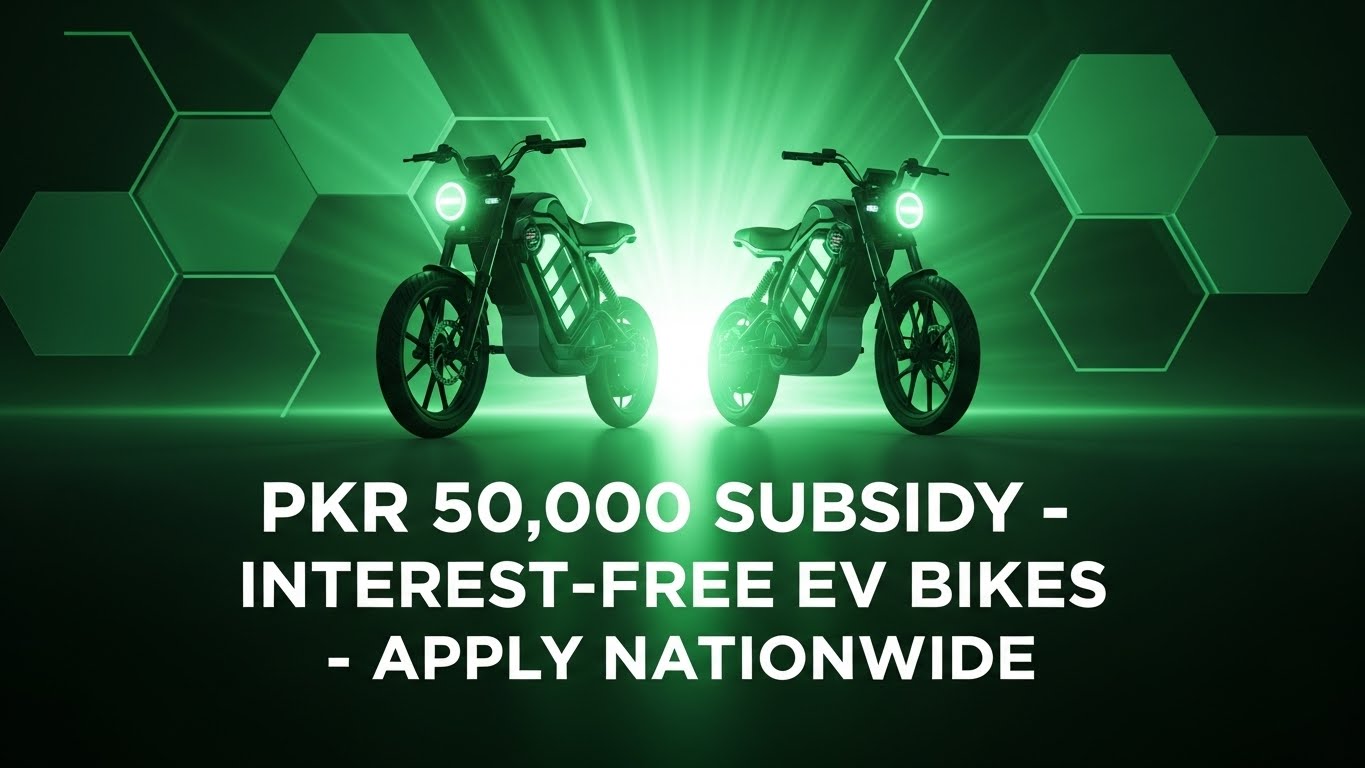
- Direct Upfront Subsidy: A flat discount of PKR 50,000 is credited immediately against the total retail price of the selected electric motorcycle or scooter.
- Interest-Free Financing: Successful applicants receive clean credit leasing up to a maximum loan limit of PKR 250,000.
- Zero Markup Framework: The monthly installment plans carry zero interest, hidden charges, or floating markups, making repayment predictable and budget-friendly.
- Target Groups: The economic relief package is explicitly optimized for university students, salaried corporate employees, daily-wage delivery riders, and micro-entrepreneurs.
Nationwide Program Parameters & Quota Distribution
Unlike restricted localized transport models, the 2026 electric bike distribution operates on a broader national scale with dedicated inclusion mandates:
1. Territorial Scope
Applications are open to permanent residents across all federating units, including Punjab, Sindh, Khyber Pakhtunkhwa (KPK), Balochistan, Azad Jammu & Kashmir (AJK), and Gilgit-Baltistan (GB).
2. Gender Inclusion (25% Dedicated Quota)
To actively promote female empowerment and ensure safe, independent mobility for women, a strict 25% special quota has been legally reserved across all districts. This measure facilitates hassle-free daily travel for female students, working professionals, and female-headed households.
3. Automated E-Balloting Selection
To eliminate political favoritism, administrative bias, or manual processing issues, final allotments are determined via a centralized computerized e-balloting system. Every verified applicant receives an identical statistical chance during the digital draws.
Also Read More: Ecodost ECV350 Electric 3-Wheeler Loader – Top Choice for Businesses
Official Eligibility Criteria for Applicants
The Ministry of Industries and Production, along with partner provincial departments, enforces a transparent, streamlined eligibility checklist:
| Eligibility Factor | Official Requirement Details |
| Age Range | Must be between 18 and 65 years old at the time of application. |
| Identity Verification | Must hold a valid, non-expired CNIC or NICOP. |
| Driving License | A valid motorcycle driving license or a valid official learner’s permit is mandatory. |
| Credit Standing | No active financial defaults or severe credit discrepancies on the e-CIB registry. |
| Employment Status | Open to students, freelancers, salaried workers, and self-employed individuals. |
Step-by-Step Online Application Process
Manual applications or paper forms are completely excluded from this cycle. To secure an allocation, candidates must utilize the dedicated digital web interface:
Step 1: Account Registration
Access the centralized official EV scheme portal. Create your secure login profile by inputting your biometrically verified mobile number and 13-digit CNIC.
Step 2: Profile Completion
Fill out the electronic application form with accurate personal profiles, educational details (for students), or employment information.
Step 3: Document Uploads
Upload clear, high-resolution scanned copies of your valid CNIC, active driving license/learner permit, and institutional verification records if applying under a student quota.
Step 4: Selection of EV Model
Browse the digital catalog of approved local EV manufacturers and select your preferred electric bike or scooter model based on range and battery specifications.
Step 5: Form Submission & Tracking
Review your data arrays to avoid disqualification. Submit the application to generate a unique digital tracking ID for the upcoming e-balloting draw phase.
Frequently Asked Questions (FAQs)
Are female applicants allowed to apply under the general merit quota as well?
Yes. Female applicants enjoy full access to the dedicated 25% reserved quota, and they can also qualify through the open merit distribution tier if their parameters align with the regional ballot metrics.
What types of two-wheeler electric vehicles are covered under the scheme?
The program encompasses a wide range of locally manufactured and certified electric bikes (70cc and 125cc equivalents) alongside modern electric smart scooters equipped with lithium-ion battery management systems.
Can an applicant submit multiple forms to increase their balloting odds?
No. The system utilizes automated duplicate detection based on CNIC verification. Submitting multiple entries under the same identity results in immediate system disqualification.
Final Verdict
The Two-Wheeler EV-Bikes Scheme 2026 is a crucial milestone in shifting Pakistan towards cost-effective, sustainable green mobility. By mitigating high upfront costs with a PKR 50,000 government subsidy and removing traditional interest margins, the framework delivers a transparent path for the public to counter inflation. Eligible individuals should organize their documentation and register via the official web portal ahead of the announced deadline.