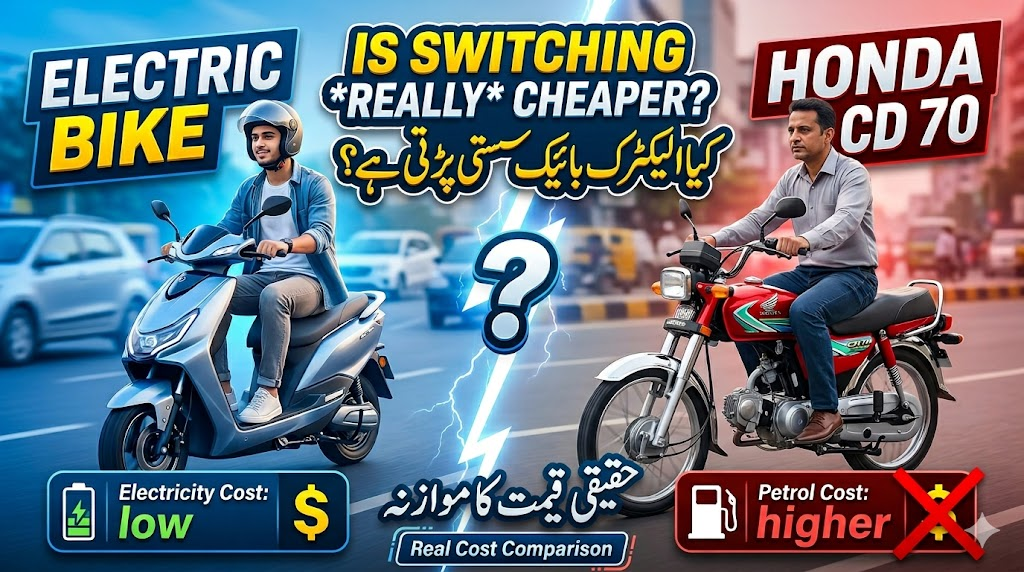
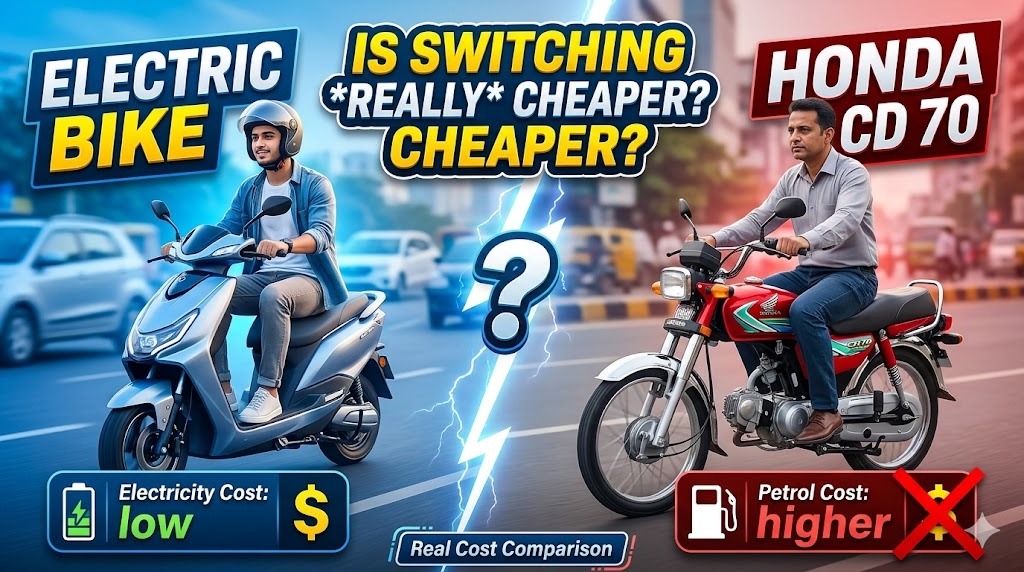
With fluctuating fuel rates, high structural maintenance, and inflationary pressures, Pakistani commuters are looking for sustainable transport solutions. If you are a student, office worker, or daily traveler, you have likely asked yourself: Is switching to an electric bike actually cheaper than riding a conventional Honda CD 70?
To help you secure an informed, data-backed buying decision and clear any confusion regarding long-term operating parameters, this guide provides detailed mathematical breakdowns, real-world comparison metrics, and honest user feedback.
1. The Core Mathematics: Petrol vs. Electricity Cost Breakdown
To determine if an EV transition delivers real value, we must calculate the exact cost per kilometer ($KM$) using current fuel and domestic electricity tariff baselines.
A. Operational Cost of a Conventional Honda CD 70
- Fuel Average: A well-maintained Honda CD 70 delivers a real-world average of approximately 50 KM per liter.
- Petrol Price Baseline: Assuming a stable baseline of roughly PKR 270 per liter.
- Cost Per Kilometer Calculation:$$\text{Cost per KM} = \frac{\text{Price of Petrol per Liter}}{\text{Average Mileage}} = \frac{270}{50} = \text{PKR 5.40 per KM}$$
B. Operational Cost of a Standard Electric Bike / Scooter
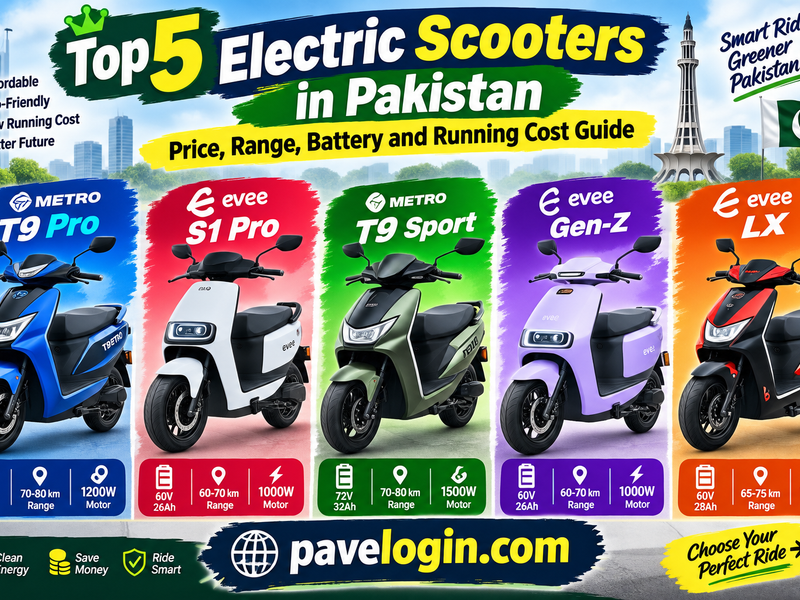
- Battery Power Profile: A standard urban electric scooter utilizes a 1.8 kWh battery pack (e.g., a 60V 30Ah setup).
- Charging Unit Consumption: Accounting for minor charging heat dissipation, it pulls roughly 2 electricity units from your domestic meter to complete a 0–100% charging cycle.
- Electricity Tariff Cost: Assuming a mid-tier residential power unit cost of PKR 50 per unit (inclusive of taxes).
- Real-World Electric Range: A 1.8 kWh battery yields a reliable driving range of 60 KM per charge.
- Cost Per Kilometer Calculation:$$\text{Cost per KM} = \frac{\text{Units Consumed} \times \text{Tariff Rate}}{\text{Real-World Range}} = \frac{2 \times 50}{60} = \frac{100}{60} = \text{PKR 1.66 per KM}$$
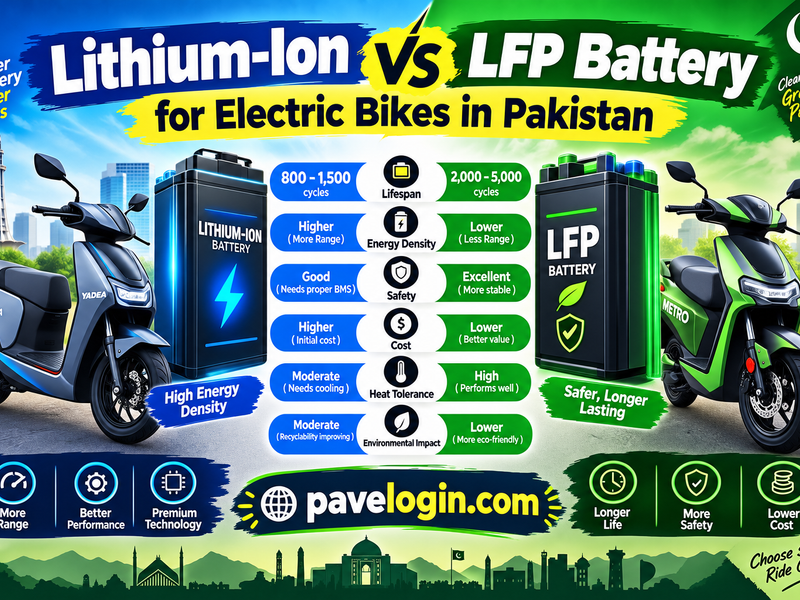
Also Read About: Lithium-ion vs LFP Battery in Electric Bikes Pakistan: Which is Better?
The Direct Comparison Matrix (Based on 50 KM Daily Commute)
| Operational Expense Metric | Honda CD 70 (Petrol) | Standard EV Scooter / Bike |
| Cost Per Kilometer ($KM$) | PKR 5.40 | PKR 1.66 |
| Daily Commuting Expense | PKR 270.00 | PKR 83.00 |
| Monthly Commuting Expense | PKR 8,100.00 | PKR 2,490.00 |
| Annual Commuting Expense | PKR 97,200.00 | PKR 29,880.00 |
Net Annual Operational Savings: By switching to an electric two-wheeler, a standard daily commuter saves PKR 67,320 purely on fuel bills every year. When you factor in eliminating monthly engine oil alterations, air filter tunings, and spark plug swaps, total operational savings easily cross PKR 80,000 annually.
2. Real-World Commuter Dilemmas & User Queries
22km Daily Commute in Karachi: CG 125 vs. CD 70 vs. Electric?
Navigating a daily 22 KM journey through Karachi’s heavily congested traffic routes requires balancing structural durability, vibration control, and operational costs:
- Honda CG 125: Offers high torque and acceleration, but its heavy fuel consumption (delivering roughly 35–40 KM/L) and high maintenance costs make it an expensive choice for simple city commuting.
- Honda CD 70: A highly reliable choice with easy parts availability. However, daily clutch and gear shifting in gridlock traffic can cause physical fatigue.
- Electric Scooter / Bike: The ideal choice for this scenario. A 22 KM round trip fits perfectly within the optimal range of a standard EV battery, meaning you only need to charge it once every two to three days. Additionally, its gearless automatic operation makes navigating bumper-to-bumper city traffic much more comfortable.
Is an Electric Scooty Better Than a Honda CD 70?
It depends entirely on your specific lifestyle needs:
- Choose an Electric Scooty if your primary focus is lowering commuting costs, enjoying a smooth, silent, gearless ride, and driving on paved city streets. It is an excellent option for university students, office workers, and lady riders.
- Choose a Honda CD 70 if your routine requires traveling across rough, unpaved terrain, driving long intercity distances, or if you want high resale value and instant roadside maintenance support.
3. The Mechanics of EV Conversion Kits in Pakistan
Is it worth converting a traditional petrol bike to electric?
Yes, converting an older chassis can be highly cost-effective if you want to avoid the high initial cost of buying a brand-new electric bike. By removing the older internal combustion engine and installing a hub motor, you can repurpose a sturdy frame (like a CD 70) into a sustainable urban commuter.
  [Strip Down Frame]     ➔     [Install BLDC Rear Hub]     ➔     [Mount LiFePO4 Battery Pack]
  Remove old engine block        Slide in 1500W electric motor     Secure cell system inside frame
How much does it cost to turn a bike into an electric vehicle?
A professional, reliable conversion kit installation typically ranges between PKR 135,000 and PKR 165,000. The total cost varies depending on your selected components:
- 1000W – 1500W Brushless DC (BLDC) Rear Hub Motor: Costs around PKR 45,000 to PKR 60,000.
- Smart Controller & Throttle Kit Assembly: Costs around PKR 15,000 to PKR 25,000.
- Lithium Iron Phosphate ($LiFePO_4$) Battery Pack: This is the most expensive component, costing between PKR 75,000 and PKR 95,000 depending on your required capacity (e.g., 60V 24Ah or 30Ah).
What is the price of a CD 70 Electric Bike in Pakistan?
- A factory-built, brand-new entry-level electric bike styled like a traditional 70cc frame retails between PKR 185,000 and PKR 220,000.
- In comparison, a brand-new petrol-powered factory Honda CD 70 model sits at an official retail price of PKR 159,900.
4. Honest Review: Is the Switch Worth It?
Advantages
- Significant Energy Cost Reductions: Lowers your per-kilometer operational transit costs by nearly 70%.
- Minimal Mechanical Maintenance: Eliminates the need for regular oil transformations, carburetor cleanings, chain adjustments, and tensioner tunings.
- Improved Ride Comfort: Zero engine vibrations and completely silent operation help lower daily commuting stress.
Limitations
- Higher Initial Price Point: High-quality lithium models require a larger upfront investment than standard petrol bikes.
- Battery Lifecycle Limits: Even durable $LiFePO_4$ packs will experience capacity drop-offs after 5 to 7 years of daily service, eventually requiring a battery replacement.
- Inflexible Refueling Windows: Requires planning around a 4 to 6-hour charging window instead of a quick 2-minute petrol station fill-up.
Frequently Asked Questions (FAQs)
Is an e-bike genuinely cheaper than a conventional motorcycle?
Yes. While the initial retail purchase price of an electric bike can be higher, its exceptionally low electricity charging costs and minimal maintenance needs mean the price difference is typically fully recovered within 14 to 18 months of regular city driving.
Can a converted electric bike handle flooded streets during rainy seasons?
Most conversion setups feature an IP67 water-resistance rating on the rear hub motor casing. However, driving through deep standing floodwater that reaches the floorboard or main controller module can cause electrical short circuits and damage the battery management system (BMS).
Disclaimer: Local electricity unit tariffs, regional petrol pricing updates, and component conversion kit availability can fluctuate across different metropolitan areas like Karachi, Lahore, and Islamabad. Always confirm current component pricing with an authorized EV engineering technician before starting a conversion project.