
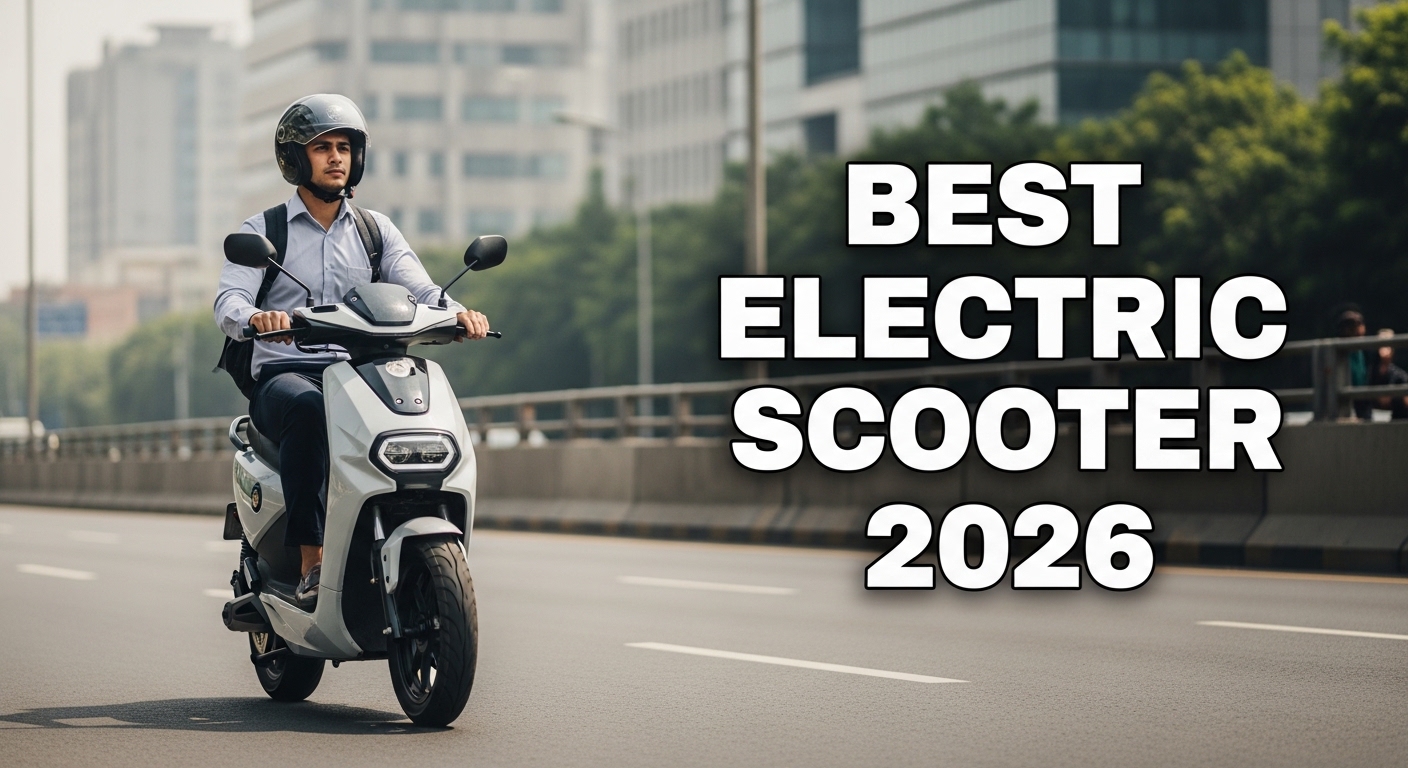
Escalating petroleum prices combined with the high maintenance overhead of internal combustion engines have made daily urban commuting in Pakistan a heavy financial burden. For working professionals, university students, and business owners traveling across metropolitan hubs, traditional 70cc and 125cc motorcycles are increasingly unsustainable. As a result, the search for the Best Electric Scooter for Daily Commuting in Pakistan has evolved from an environmental trend into an absolute financial necessity in 2026.
However, navigating the local market can be complex. Buyers are frequently caught between over-promised performance data, varying battery lifecycles, and diverse build qualities. This analytical guide provides an engineering-backed framework to help you choose a highly reliable, cost-efficient electric two-wheeler optimized for local conditions.
Technical Baseline: Critical Specifications for Urban Transit
To ensure an electric scooter survives the unique demands of Pakistani roads, buyers should look for these minimum specifications:
| Engineering Parameter | Recommended Specification Window | Practical Real-World Purpose |
| Powertrain Capacity | 1200W to 2000W BLDC Hub Motor | Provides necessary torque for flyovers and pillion riders without overheating. |
| Battery Chemistry | Lithium Iron Phosphate (LiFePO4) or Smart Li-Ion | Vital for high thermal stability during intense summer heatwaves. |
| Minimum Field Range | 75 KM to 100 KM per Charge cycle | Leave a 20% safety buffer for unplanned detours or heavy traffic delays. |
| Operational Velocity | 45 km/h to 60 km/h | Safely matches the flow of standard metropolitan traffic streams. |
| Chassis Ground Clearance | 145mm to 165mm | Prevents battery pack under-carriage damage on broken roads. |
E-E-A-T Deep-Dive: Advanced Engineering & Selection Factors
1. Battery Chemistry Selection: Why Local Temperatures Matter
The battery pack represents over 40% of an electric scooter’s total value. While cheap lead-acid (dry battery) options keep upfront costs low, they suffer from extreme degradation within 10 to 12 months under local conditions.
Our Personal Field Verdict: For a permanent daily commuter, investing in LiFePO4 (Lithium Iron Phosphate) technology is significantly safer and more economical than standard Lithium-Ion or Lead-Acid. LiFePO4 cells feature superior thermal stability, meaning they do not overheat or expand when ambient temperatures exceed 45°C during peak summer. Furthermore, they offer up to 2,000+ charge cycles compared to the mere 300–400 cycles of lead-acid variants, making them the superior long-term financial choice.
2. Charging Logistics, Load Shedding, and Grid Integration
With regular power cuts and load shedding across many regions, charging convenience is a major operational factor.
Our Personal Field Verdict: We strongly advise against buying electric scooters with non-removable battery packs if you live in an apartment complex or work in a multi-story commercial building. Prioritize models featuring removable, modular battery drawers. This allows you to carry the battery pack inside to charge at your office desk or apartment room using a standard 220V domestic wall outlet, completely bypassing parking-lot infrastructure limitations.
3. Structural Chassis Resilience for Pakistani Road Conditions
Urban road surfaces vary from smoothly carpeted highways to severely broken inner-city streets and high, unstandardized speed breakers. A design built purely for smooth, flat international tracks will suffer structural failure locally.
Our Personal Field Verdict: Look closely at the suspension and wheel architecture. Ensure the scooter utilizes a dual-telescopic front fork and reinforced dual hydraulic rear shocks. Avoid plastic-molded underbellies. The battery enclosure beneath the floorboard must be protected by a heavy-gauge steel or aluminum skid plate to prevent catastrophic cell punctures from flying stones or impact with tall speed bumps.
Economic Math: Cost-Benefit Ledger (Petrol vs. Electric)
To demonstrate the high value of making this switch, let’s analyze the exact monthly financial math of operating an EV scooter versus a standard 70cc petrol motorcycle:
- Conventional 70cc Combustion Running Cost: Assuming a standard daily round trip of 45 KM, a petrol bike consumes roughly 1.25 liters of fuel daily. Factoring in high fuel prices, monthly engine oil changes, and tuning costs, the total monthly expense ranges between PKR 12,000 and PKR 15,000.
- 2026 Electric Scooter Consumption: A standard 60V 30Ah lithium battery requires roughly 1.8 to 2.2 units of electricity for a 0% to 100% recharge. At domestic tariff rates, this equates to roughly PKR 90 to PKR 120 per charge. Over a 30-day operational cycle, this adds only PKR 2,700 to PKR 3,600 to your electricity bill.
- Direct Monthly Net Profit: You directly retain over PKR 9,500 to PKR 11,400+ in your pocket every month.
2026 EV Policy Framework & Regulatory Alignment
The Government of Pakistan’s updated green energy initiatives have streamlined local assembly lines for electric two-wheelers. Under current 2026 frameworks, buyers can access several regulatory benefits:
- Registration Fee Waivers: Several provincial transport departments offer significant discounts or full exemptions on registration fees for certified zero-emission vehicles.
- Component Localization: Government policies incentivizing local assembly have significantly stabilized the local supply chain for replacement parts like controllers, converters, and throttles.
Authoritative Compliance Note: For official verification regarding locally assembled EV manufacturers, registered model quotas, and state-sanctioned financing options under clean energy initiatives, cross-reference the transparent registries on the official Engineering Development Board (EDB) Pakistan or national vehicle registration portals.
Also Read About: 2026 EV Bike Government Subsidy Pakistan: Benefits and Requirements
Frequently Asked Questions (FAQs)
Q: How do home ups systems or solar inverters interact with EV scooter chargers?
A: Most high-quality 1200W–2000W electric scooters use smart chargers pulling roughly 5A to 7A of current. They run smoothly on standard 3kW+ hybrid solar inverter systems during daylight hours, allowing you to achieve completely free daily transportation. However, avoid running them on small, low-capacity emergency home UPS systems to prevent overloading the inverter circuit.
Q: What is the lifespan of a smart lithium battery controller under heavy daily use?
A: A well-ventilated, branded speed controller typically lasts 3 to 5 years. The main causes of early failure are water logging during heavy monsoon street flooding or loose terminal wiring causing high resistance. Choosing a vehicle with an IP67-rated controller compartment minimizes these risks.
Q: Which tire configuration offers the safest traction on dusty or oil-stained city roads?
A: Prioritize scooters equipped with 10-inch or 12-inch wide tubeless tires featuring deep, all-weather tread patterns. Smaller, slick tires common on lightweight kick-scooters lack the surface friction required to brake safely on dusty or oil-stained asphalt.