
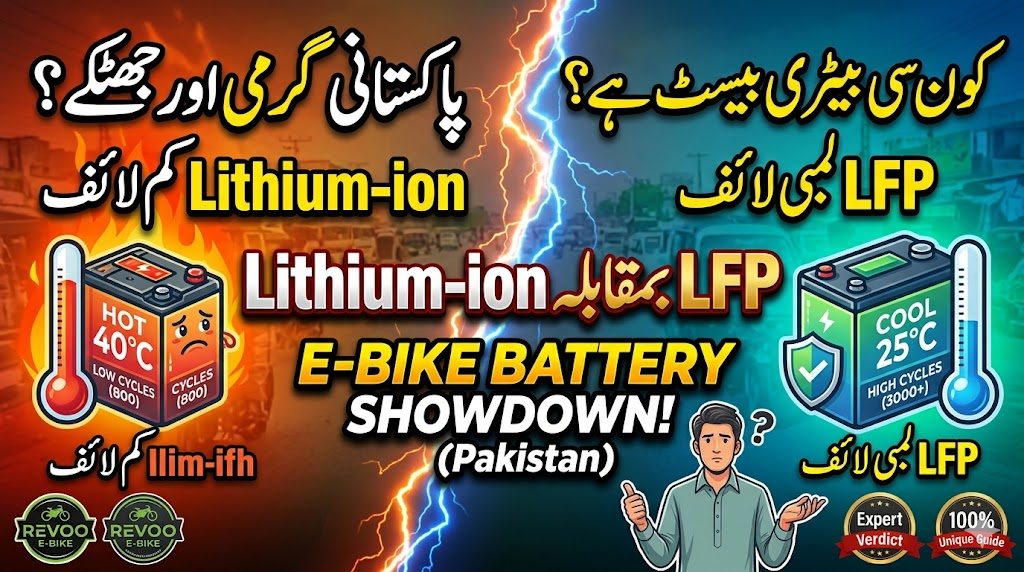
The electric vehicle (EV) revolution has taken Pakistan by storm, offering an incredible shield against skyrocketing petrol prices. For students, office-goers, and daily commuters, shifting to an electric bike is no longer just an eco-friendly choice—it is a critical financial strategy. However, as local manufacturers introduce diverse battery options, buyers are faced with a vital technical decision: Should you choose a Lithium-ion (Li-ion) or a Lithium Iron Phosphate (LFP) battery pack?
Pakistan’s environmental and infrastructure conditions are entirely unique. Navigating extreme summer temperatures that frequently cross 45°C while riding on bumpy, unpaved urban roads places immense stress on an e-bike’s power cell. Choosing the wrong battery type can lead to premature capacity loss, short lifespans, and expensive replacements.
Lithium-ion vs. LFP: The Structural Differences
While both are variations of lithium technology, their internal chemical compositions yield entirely different operational profiles.
1. Lithium-ion (NMC/NCA) Batteries
Lithium-ion cells (typically Nickel Manganese Cobalt) are highly praised for their high energy density. This means they can store a massive amount of power in a highly compact, lightweight frame. They are perfect for sleek, high-speed electric scooters where saving space and reducing weight are top priorities.
2. Lithium Iron Phosphate (LFP) Batteries
LFP is a newer chemistry variant in the mainstream Pakistani consumer market. It replaces cobalt with iron phosphate. While this makes the battery pack notably heavier and larger than a standard Lithium-ion pack of the same capacity, it provides structural stability and chemical resilience that are highly advantageous for local roads.
Climate Combat: Performance in Extreme Pakistani Heat
The single greatest enemy of an electric bike battery is heat. When ambient temperatures rise, internal resistance spikes, causing chemical cells to degrade significantly faster.
- Lithium-ion Vulnerability: Lithium-ion cells prefer an operating environment below 35°C. When exposed to extreme afternoon heatwaves in cities like Multan, Sukkur, or Lahore, they suffer from rapid thermal accumulation. If charged or discharged aggressively in high heat, they risk swelling or structural failure.
- The LFP Thermal Advantage: LFP batteries are exceptionally efficient and heat-tolerant. They can safely handle internal thermal conditions reaching up to 55°C without compromising their safety profile. This thermal threshold makes LFP units much safer and less prone to overheating or fire hazards during intense summers.
Road Resilience: Surviving Local Infrastructure and Potholes
Mechanical shock is another critical factor impacting battery health across the country. Constant vibrations from rough roads can damage internal cell connections over time.
Because LFP batteries are heavier and less chemically delicate, they are typically built with robust structural casings to withstand vibrations. On the other hand, the lighter, more compact build of Lithium-ion packs makes them reliant on premium build quality and advanced suspension alignment, such as the heavy-duty hydraulic setups seen on top-tier models like the REVOO E52.
Also Read More About: Top 5 Electric Scooters in Pakistan 2026 Price and Specifications
Lifespan and Financial Return on Investment (ROI)
When calculating long-term costs, looking exclusively at the initial purchase price is a common mistake. The true value of an e-bike battery is determined by its cycle life—the number of full charges and discharges it can sustain before its maximum capacity drops significantly.
| Evaluation Metric | Lithium-ion (NMC) Battery Pack | Lithium Iron Phosphate (LFP) Pack |
| Energy Density | High (Lightweight & Compact) | Moderate (Heavier & Bulkier) |
| Average Lifespan | 800 to 1,200 Charge Cycles | 2,000 to 3,000+ Charge Cycles |
| Estimated Years of Use | 3 to 4 Years of daily commuting | 7 to 10 Years of daily commuting |
| Thermal Safety Limit | Moderate (Requires active cooling care) | Excellent (High resistance to overheating) |
| Ideal Use Case | Lightweight urban scooters & commuters | Long-term heavy commuters & cargo loaders |
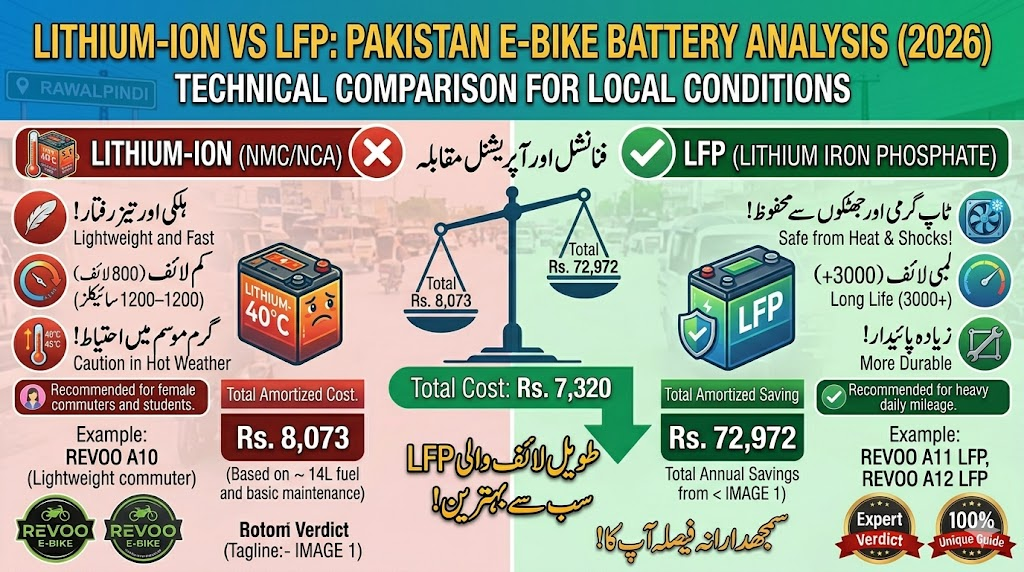
As shown in the data, LFP batteries easily offer double or triple the operational life of standard Lithium-ion packs. While a Li-ion pack may require replacement after 3–4 years, a well-maintained LFP battery can function efficiently for up to a decade, providing a phenomenal return on investment.
Real-World Application: The REVOO Fleet Comparison
To understand how these numbers translate to the road, look at the real-world configurations used by prominent local manufacturers like REVOO:
- REVOO A11 & A12 Series: REVOO explicitly offers these commuter bikes in two distinct variants: standard and LFP. The standard model utilizes lightweight configurations suited for quick urban trips. Meanwhile, the A11 LFP and A12 LFP variants are specifically built for riders who prioritize cost-effective longevity, offering a robust 36-month battery warranty period compared to the standard 24-month coverage.
- REVOO E52: This premium model uses a massive 96V 35Ah high-capacity Graphene-based setup optimized for high-power performance, delivering top speeds of up to 75 km/h. This shows that high-capacity alternatives are preferred when raw speed and endurance are required over the specific chemical traits of entry-level LFP systems.
Expert Verdict: Which Is Better for Pakistan?
For the vast majority of regular commuters in Pakistan, LFP (Lithium Iron Phosphate) is the superior, more efficient choice. Its structural safety in scorching summer heatwaves, combined with a massively extended lifespan of over 2,000 cycles, makes it an incredibly cost-effective option over time. It effectively minimizes the fear of facing a steep battery replacement cost within a few short years.
However, if you are a lighter rider, a female commuter, or a student driving a compact model like the REVOO A10 (which relies on a lightweight, highly portable design), a standard high-quality Lithium-ion configuration remains a highly recommended option. It provides the agility and ease of handling that heavier LFP packs cannot match.
Frequently Asked Questions (FAQs)
Why are e-bikes with LFP batteries considered more cost-effective?
While LFP batteries may carry a slightly higher upfront cost, they last up to three times longer than standard batteries (up to 3,000 cycles). This eliminates the need for an expensive battery replacement every few years, significantly lowering your long-term cost per kilometer.
Can I replace my bike’s standard battery with an LFP battery?
Yes, many electric bikes can be upgraded to LFP battery packs. However, because LFP cells are heavier and bulkier, you must ensure your bike’s battery compartment has enough physical space and that your controller matches the specific voltage requirements.
Does the intense heat in Pakistan cause Lithium-ion batteries to explode?
Modern, branded electric bikes utilize an advanced Battery Management System (BMS) that automatically cuts off power if internal temperatures reach dangerous levels. While explosions are extremely rare in certified brands, unbranded or modified low-quality Lithium-ion packs are at a much higher risk of swelling and failing under extreme heat.
How many units of electricity does it take to charge an LFP battery?
A standard commuter LFP battery (such as a 60V 30Ah pack) consumes approximately 1.5 to 2.0 units of electricity for a complete charge, giving you a running cost of just around Rs. 1.5 per kilometer.